
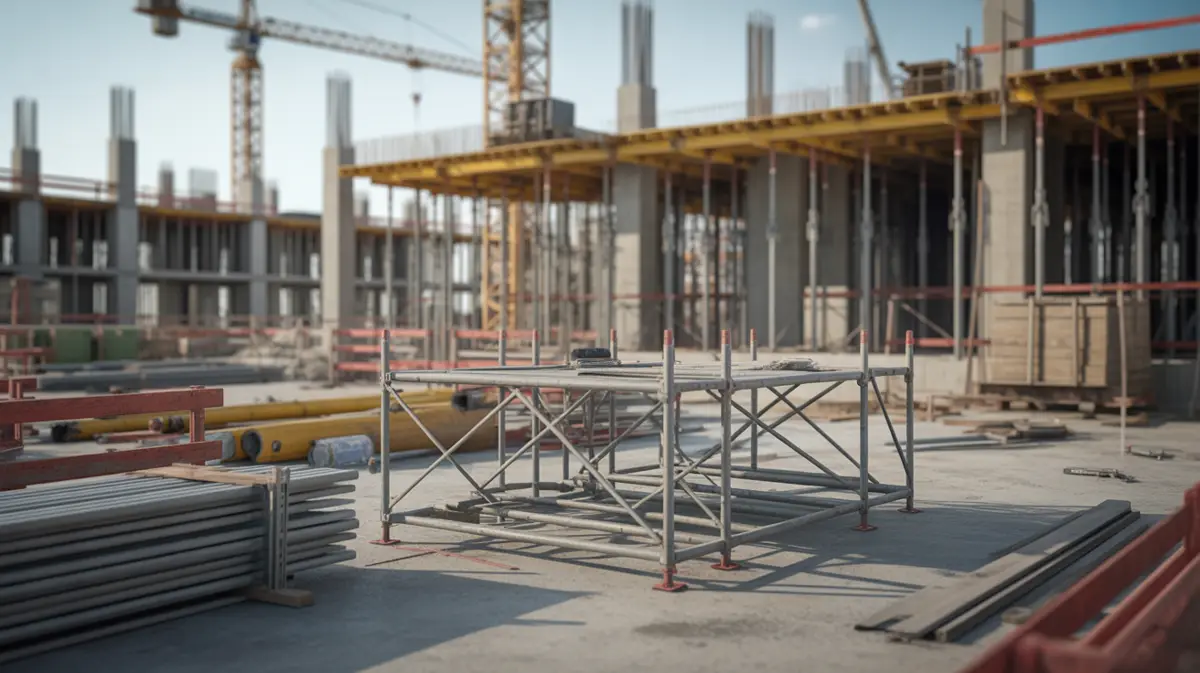
NYC construction injury claims involving site evidence often fail because crucial evidence can disappear during the first 72 hours after an incident, including site photographs and records identifying contractors on NYC Department of Buildings permits.
For construction workers in New York, compensation can come from two separate tracks: workers' compensation benefits through the New York State Workers' Compensation Board, and a third-party lawsuit against owners and general contractors under Labor Law §240(1), §241(6) or §200. These statutes address different construction hazards and duties, and liability depends on the accident circumstances and each defendant's role.
In this guide, we’ll walk through the hidden pitfalls that trip up most claimants, explain how third-party liability works alongside Workers' Compensation Board proceedings, and show you practical steps to keep your case on track, including identifying contractors and preserving medical documentation.
Most claims crumble because early missteps erase evidence, and many workers overlook third-party liability involving parties other than their employer. Acting fast, documenting everything, and consulting a construction injury attorney can help preserve your rights. Site photographs, witness details, and NYC Department of Buildings records can help clarify responsibility under New York's Labor Law.
If you’re a laborer in Queens, Brooklyn, Manhattan, or any part of New York City, the stakes are high and the rules are strict. Missing a deadline or failing to capture a photo can mean the difference between a fair settlement and a denied claim. Workers' Compensation Board filings and lawsuits in courts such as Queens County Supreme Court involve distinct procedures, making it important to check which requirements apply.
We’ll break down the legal landscape, point out common misconceptions, and give you a clear checklist to follow after an injury, covering Workers' Compensation Board documentation, medical records, and evidence relevant to a separate Labor Law claim.
Why Most Construction Injury Claims Fail in the First 72 Hours
Construction injury claims can falter in the first 72 hours because evidence begins disappearing as soon as a worker is struck by a falling object or slips on a wet floor. Within three days, site supervisors may already have removed the equipment involved, and witnesses might forget key details. Photographs and contemporaneous medical records can help document conditions on a Manhattan construction site.
In practice, employers often rely on internal incident reports that omit critical facts, while workers may not realize the need to preserve medical records right away. Workers' Compensation Law §110 generally requires employer reporting for injuries causing lost time beyond the working day or shift of the accident, among other reporting triggers. Form C-2 is the historical reference; the Workers' Compensation Board now identifies Form C-2F for the employer's injury report. Employer reporting does not replace a worker's own documentation, including treating-doctor records and a worker's Form C-3 claim.
A quick look at typical evidence loss timelines helps illustrate the urgency:
Key Early Actions
- Site Photos: Clear images of the site, equipment, and visible injuries within the first hour, when safely possible, can prevent loss of visual evidence. On a New York City jobsite, photographs of scaffold components, falling objects, or wet flooring can document conditions before cleanup.
- Witness Information: Recording names and contact details of coworkers who saw the incident before they leave the jobsite or shift can preserve access to firsthand accounts. Identifying each witness's subcontractor can also help distinguish crews on a multi-contractor Manhattan project.
- Employer Notice: A prompt written injury notice can create an official record of the accident, location, and reported injuries. Relevant OSHA guidelines may help describe safety concerns, but citing OSHA does not substitute for notice under New York workers' compensation requirements.
- Medical Records: Keeping every doctor’s note, prescription, and test result can help with documentation, as insurers often request them early in the process.
Treating the first 72 hours as a critical evidence-preservation window can help improve the odds that a construction injury attorney can build a strong case. This is a practical window, not a universal New York filing deadline. Skipping any of these steps may leave gaps that insurers exploit when comparing incident reports, witness accounts, and medical records.
When Workers’ Comp Isn’t Enough: Third-Party Liability on Multi-Contractor Sites
When workers’ compensation is not enough, an injured construction worker may also have a third-party claim for construction site injuries against a separate party responsible for the accident on a multi-contractor site. Many workers assume workers’ compensation covers every injury and all resulting losses. A scaffold erected by a subcontractor, for example, can be the true source of a fall, making that subcontractor’s role important to investigate alongside the Workers’ Compensation Board claim.
Understanding how liability spreads across contractors, owners, and equipment manufacturers is important for pursuing available compensation. New York Labor Law §240(1) imposes strict liability for certain gravity-related injuries when a statutory violation causes the accident. Labor Law §241(6) imposes nondelegable duties on owners and general contractors for construction site safety, but liability generally requires a violation of an applicable, sufficiently specific Industrial Code provision, not merely proof of a hazard. These protections can support a third-party claim.
Liability Layers
- Primary Contractor Identification: Determining which company hired the subcontractor responsible for the faulty scaffold can help clarify liability, because that company may share responsibility under relevant labor law. Contracts and site records can help identify owners, general contractors, and potential statutory agents under Labor Law §240(1) and §241(6).
- Equipment Certification: Reviewing certification, inspection, and maintenance records where available can help establish whether the equipment met applicable OSHA standards. A defect may open a product liability claim against the manufacturer, although OSHA compliance alone does not establish whether equipment was defective.
- Site Safety Plans: Reviewing the site safety plan required by the NYC Department of Buildings where applicable to the project can help identify missing elements. Missing elements may support a third-party claim when connected to the accident, alongside evidence of who controlled the work and implemented safety measures.
A construction injury attorney can untangle these layers, filing claims against the right parties while working to preserve workers’ compensation benefits. Workers’ Compensation Law §29 governs important aspects of coordinating third-party recoveries with those benefits, including potential reimbursement rights. Ignoring third-party options can sometimes leave money on the table, even when a Workers’ Compensation Board claim is already underway.
The Documentation Gap That Undermines Even Strong Injury Cases
Missing site documentation can stall even a strong construction injury case because a solid medical record alone may not establish how the accident happened. New York courts look for a clear chain of causation linking the injury to a specific safety breach, with site evidence helping establish any applicable Labor Law §200, §240(1), or §241(6) claim.
On many New York construction sites, digital tools like Procore or iAuditor capture daily logs, but workers rarely request access after an accident. Early requests to the site's general contractor for those private records, and to the NYC Department of Buildings for agency-held inspection reports or violations, can reveal crucial safety evidence. The Department of Buildings does not necessarily hold a contractor's digital logs, so identifying who controls each record matters.
Documentation Checklist
- Daily Safety Logs: A request to the general contractor for the site’s daily safety log can identify inspections, equipment checks, and hazards noted that day, including entries maintained through Procore or iAuditor.
- Tool Inspection Records: Obtaining the most recent inspection report for the equipment involved can help identify missed checks. Missing signatures can signal negligence, although their significance depends on the inspection requirements and other evidence relevant to a New York Labor Law claim.
- Medical Correlation: Aligning doctor’s notes, orthopedist findings, and any MRI reports with the incident timeline can show how the injury’s symptoms match the event described in the site logs.
- Photographic Timeline: Compiling a chronological set of photos, from pre-incident conditions to post-incident aftermath, can illustrate changes. Comparing those images with dated Procore entries or NYC Department of Buildings inspection records can help clarify the sequence.
Closing the documentation gap can provide a construction injury attorney with evidence to help prove liability under applicable New York Labor Law provisions, supported by evidence collection for personal injury cases. Site logs, equipment records, medical findings, and photographs can also support factual details in a bill of particulars. Overlooking any of these items may weaken the narrative and potentially reduce settlement value.
How Subcontractor Classification Determines Your Legal Options After an Accident
Not all subcontractors are created equal under New York law. Whether a worker is classified as an employee, independent contractor, or a leased‑employee changes the avenues for recovery.
Misclassification is a common tactic that leaves injured workers without proper benefits. The Workers' Compensation Board uses specific criteria to determine if an individual is an employee or independent contractor, impacting eligibility for benefits and third-party claims, important considerations in workplace injury claims involving worker classification.
Classification Impacts
- Employee Status: May grant access to workers’ compensation and the ability to sue responsible third parties for safety violations under Labor Law §200, §240(1), or §241(6), where applicable. Workers’ Compensation Law §11 generally limits personal injury suits against the employer itself.
- Independent Contractor: May face recovery limited to breach of contract claims in a particular contractual dispute, but that is not a general rule for construction injuries. Negligence or applicable Labor Law claims may also exist. Whether another contractor qualifies as a joint or special employer requires examining the working relationship, not just the contract label.
- Leased‑Employee: May allow pursuit of benefits involving both the staffing agency and the host employer, depending on their employment relationships. A host’s failure to provide a safe environment may support a claim, but if both entities qualify as employers, workers’ compensation exclusivity can generally bar personal injury suits against both.
A construction injury attorney can analyze the contract, payroll records, and actual job duties to determine the correct classification, potentially unlocking appropriate legal pathways. Reviewing who directed the work and comparing that evidence with Workers’ Compensation Board records can help clarify employer status and possible third-party liability.
What General Contractors Don’t Tell You About Their Insurance Coverage
General contractors may not explain that their mix of general liability, commercial general liability, and builder’s risk policies contains fine print that can limit payouts for worker injuries. Commercial general liability is a form of general liability coverage, while builder’s risk generally covers construction property rather than bodily injury claims under New York Labor Law.
Understanding policy limits, exclusions, and the distinction between primary and excess coverage is vital before filing a claim. A detailed review of a contractor’s commercial general liability policy can reveal endorsements and exclusions related to work performed by subcontractors or specific construction activities. For a New York Labor Law §240(1) or §241(6) claim, reviewing the actual policy language helps distinguish the contractor’s potential legal liability from the insurer’s contractual obligation to provide coverage.
Typical coverage elements and common exclusions:
Key Coverage Secrets
- Primary vs. Excess: Primary policies generally pay first; excess policies ordinarily respond after the applicable underlying limit is exhausted, subject to their terms. This structure may leave gaps for large settlements, including construction injury claims brought in New York County Supreme Court, if exclusions or excess policy conditions restrict coverage.
- Sub‑contractor Waivers: Some contracts require subcontractors to waive claims against the contractor’s insurance, potentially shifting risk back toward the worker. It can help to distinguish a waiver of subrogation from a release of claims: neither automatically eliminates an injured worker’s rights, and Workers’ Compensation Law §29 may also affect third-party recovery rights.
- Policy Endorsements: It can help to ask whether endorsements add or restore coverage for fall-related injuries, since some policies may exclude relevant injury claims or construction activities. For elevation-related claims under Labor Law §240(1), the policy’s exclusions and endorsements need review rather than an assumption that all standard policies cover or exclude falls.
By dissecting the contractor’s insurance, a construction injury attorney may be able to identify potential reserves and available coverage and negotiate with insurers who might otherwise deny compensation. In New York Supreme Court litigation, CPLR §3101(f) provides for insurance disclosures that can help clarify applicable policies and limits; an insurer’s internal reserve is not a promise of payment.
The Medical Treatment Timing Issue That Weakens Settlement Negotiations
Delaying treatment or seeing multiple providers without coordination can weaken settlement negotiations by creating a perception of exaggeration. Insurers may cite inconsistencies among emergency department records, orthopedist evaluations, and physical therapy notes to lower settlement offers.
A coordinated treatment plan, documented from day one, can help support the causal link between the accident and the injury. Consistent documentation by medical providers, such as those in New York's specific regional healthcare networks, of the injury's causation to the construction incident can be important for a potential personal injury lawsuit under CPLR §214(5).
Timing Best Practices
- Immediate Evaluation: An evaluation by a qualified medical professional within 24 hours, even if injuries seem minor, can establish a baseline record. An emergency department record from NYC Health + Hospitals can document initial symptoms and the reported construction incident; this timing is not a universal legal requirement.
- Specialist Referral: Prompt follow-up with a specialist if symptoms persist, with each visit documenting any connection to the original incident, can help maintain a consistent treatment record.
- Consistent Documentation: A treatment diary noting dates, symptoms, and provider recommendations can help avoid contradictory statements. Comparing those entries with physical therapy notes and orthopedist records can also identify discrepancies for clarification with the treating provider.
When a construction injury attorney presents a clear, time-stamped medical narrative, supported by emergency department records, orthopedist findings, and physical therapy notes, insurers may have less room to argue that the injury was unrelated to the construction accident or inflated, a concern when documenting injuries that are hard to prove.
Why Waiting for OSHA’s Report Before Filing Can Cost You Leverage
OSHA investigations can take weeks, and the agency’s final report often arrives after the statutory deadline for filing a personal injury claim. Relying on that report may erode bargaining power.
The statute of limitations for a construction injury claim can vary, but practical deadlines for preserving evidence are often shorter. Claims involving public entities such as the MTA or NYCHA require checking the particular defendant and governing statute: a Notice of Claim is typically required within 90 days where General Municipal Law §50-e applies. That notice deadline can precede a formal OSHA investigation or findings from other bodies. MTA-related requirements can differ by operating entity, so treating every public-authority claim alike can create procedural problems.
Strategic Timing
- Early Notice: Preparing and submitting any required claim notice within the first week, regardless of OSHA’s schedule, may help protect the legal timeline. Early action can be helpful, but a notice alone does not lock in or extend every deadline; the correct recipient and applicable General Municipal Law §50-e requirements also matter.
- Preliminary Findings: OSHA’s initial observations may be available within days, and obtainable findings may support the claim while the full report is pending. Availability is not assured on that schedule, and preliminary observations need to be distinguished from final agency conclusions.
- Independent Evidence Preservation: Collecting available photographs, witness statements, and equipment logs rather than waiting for OSHA’s documentation can help preserve evidence. Independent preservation can also include identifying NYC Department of Buildings records and requesting that contractors retain site photographs, inspection records, and relevant equipment maintenance logs, without entering unsafe or restricted areas.
A construction injury attorney can file the necessary paperwork promptly, using the limited information available to help maintain leverage and potentially prevent insurers from arguing procedural delays. Depending on the claim, that work may include commencing an action in the appropriate county Supreme Court and seeking contractor records through discovery, without waiting for OSHA’s final findings.
Third-party recoveries in New York are subject to the workers' compensation carrier's lien under Workers' Compensation Law §29, and the lawsuit itself generally must start within three years under CPLR §214(5). The lien and related settlement requirements warrant separate review from the filing deadline. An OSHA investigation does not itself extend that period, and exceptions or defendant-specific requirements can affect the applicable timeline.
Securing Your Construction Claim
Pursuing a construction injury claim starts with understanding early-stage pitfalls, identifying potential third-party liability, and preserving the documentation needed to help protect your rights across Queens, Brooklyn, Manhattan, and the broader New York City area. Workers’ Compensation Board records, jobsite photographs, and medical records can help clarify what happened. Acting quickly, preserving evidence, and consulting a construction injury attorney about potentially applicable protections under Labor Law §200, §240(1), and §241(6) may help clarify potential avenues for pursuing compensation after a complex accident.
If you’ve been injured on a jobsite, waiting for the next OSHA report or insurance call can delay efforts to build a solid case. Contact Garber Legal PLLC at 263 Bowery in Manhattan today to schedule a confidential review of the accident, available records, and potential legal options.
This article is general information, not legal advice, and does not create an attorney-client relationship. Attorney advertising.