
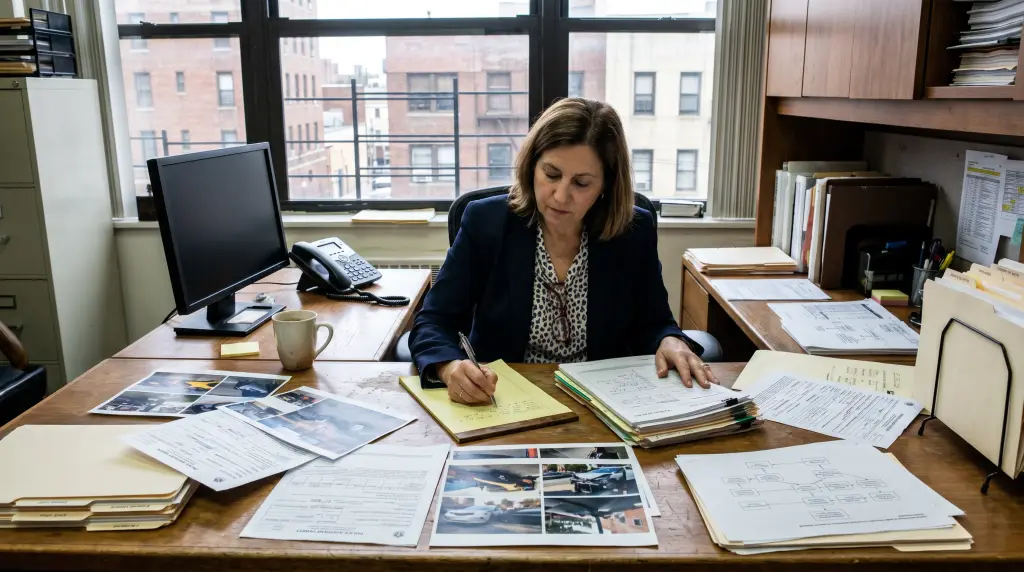
Putting your rights into action starts with understanding the claims process and what to expect as you seek compensation for your injuries. In New York, knowing how medical records, insurance submissions and court filings fit together can help you move forward with confidence.
Protecting your rights in New York often comes down to records: the police accident report, the MV-104 report submitted to the NYS DMV under Vehicle and Traffic Law §605 when required, medical records and written notice to any employer or public entity involved, relevant to automobile accident claims and required records. For instance, a car accident claim against a public entity may require a Notice of Claim within 90 days under General Municipal Law §50-e. For an accident involving the MTA, the specific MTA entity and governing statute matter, so it can help to ask which notice requirements apply rather than treating every transit-related claim alike.
- What to Look For: It can help to discuss how the contingency fee and case expenses work, and whether the attorney has experience in Queens County Supreme Court and with the local insurers involved in your claim. A written retainer agreement can clarify how expenses are handled and how the attorney’s fee is calculated.
- Common Case Types Handled: Queens personal injury lawyers routinely handle car and truck accidents, slip and fall cases involving premises liability, construction site injuries, and medical malpractice claims. These attorneys address the unique challenges each case presents, such as Insurance Law §5102(d)’s serious injury threshold for certain motor vehicle claims, potentially applicable Labor Law protections for construction injuries, and medical expert review in malpractice cases.
- Important Time Limits: New York’s statute of limitations under CPLR §214 generally gives you three years from the date of your accident to file a personal injury lawsuit, making prompt action critical. Different rules can apply, including CPLR §214-a for medical malpractice. Acting promptly not only helps protect your legal rights but also preserves vital evidence, including witness statements, photographs and medical records such as MRI reports, that can strengthen your case.
- Type of Accident: The specific circumstances of your accident, whether it involved a vehicle collision, a dangerous property condition, workplace hazards or medical negligence, will shape the legal strategy your attorney develops. Each accident type requires different evidence, expert witnesses and legal arguments to build a compelling claim. Relevant sources may include an NYPD accident report, NYC Department of Buildings records, OSHA records or an orthopedist’s treatment notes, depending on what happened.
- Timing of Your Injury: The date your injury occurred is a crucial factor in determining filing deadlines and affects the availability of evidence and witnesses. Consulting with an attorney soon after your injury helps identify and address all time-sensitive steps needed to protect your claim. Reviewing dated treatment records and the applicable CPLR limitations provisions can help distinguish the accident date from other dates that may affect the legal analysis.
Most people think filing a claim is just paperwork, but the timing of evidence collection often decides the outcome. Acting fast and preserving records can change a settlement dramatically. An NYPD accident report, contemporaneous photographs and physical therapy records can help establish how an injury occurred and how it affected daily life.
Many residents of Queens and Brooklyn assume that any lawyer will handle their case the same way, yet local court nuances and insurance habits can differ dramatically across boroughs. Ignoring those subtleties can cost you a sizable portion of a potential recovery. The real hurdle is not simply finding a lawyer but understanding the procedural quirks that protect your rights. In Queens County Supreme Court and Kings County Supreme Court, applicable court and individual part rules can affect conference preparation, discovery scheduling and motion practice, while insurer practices also warrant case-specific attention.
This guide walks you through the specific actions that help keep your claim on solid footing from the moment you decide to seek help. By the end, you’ll view your injury case through a lens that highlights evidence, deadlines and strategic communication, especially in Manhattan’s busy courts. That includes understanding how records and discovery support a case in New York County Supreme Court at 60 Centre Street, subject to the rules and circumstances of the particular claim.
Step 1: Gathering Immediate Evidence Before It Vanishes
Securing immediate evidence means promptly gathering photographs, witness statements, and medical records before the scene changes. If you’ve just been injured on a Brooklyn sidewalk, your first instinct may be to call a friend, but that delay can erase crucial proof. Many people assume an NYPD accident report alone is enough, yet these additional records need prompt attention before city construction crews or weather alter the scene. For a construction site injury, documenting conditions that may violate Labor Law §240(1) or New York Industrial Code rules is often critical to establishing liability in construction site accident claims involving evidence. Section 240(1) addresses certain elevation-related risks, while applicable Industrial Code provisions may support a Labor Law §241(6) claim; their relevance depends on the work and accident circumstances.
Waiting for an attorney to request records can pose risks; insurers often claim evidence wasn’t preserved. In practice, photographs, notes of the exact location, and contact info from anyone who saw what happened can help document an incident. This preparation can result in a dated photo folder, a list of witnesses, and a copy of the accident report ready for attorney review.
Key Evidence Items
- Photographs: Images of the injury, surrounding hazards, and any property damage from multiple angles within the first hour can help document conditions, if safety and medical needs permit. For a Brooklyn sidewalk incident, useful images may include the nearest street sign, building entrance, and wider views showing where the hazard sits.
- Witness Details: Names, phone numbers, and brief statements recorded while memories are fresh can be useful, as can knowing whether witnesses are willing to sign an affidavit. Records of what each person actually observed can matter during a deposition in a Kings County Supreme Court case.
- Medical Records: Promptly obtaining the emergency department intake form and any follow-up appointment summaries can help document care. Available orthopedist notes, MRI reports, physical therapy records, and ICD diagnosis records can connect the initial treatment with the documented course of care.
With solid evidence in hand, you’ve built a factual foundation better positioned to withstand insurance scrutiny and court discovery. Dated photographs, witness accounts, and treatment records also give your personal injury attorney a clear narrative for crafting a persuasive claim. If litigation proceeds in Kings County Supreme Court, these materials can inform a bill of particulars and deposition preparation. The next step moves you from raw data to a formal legal strategy.
Step 2: Assessing a Claim’s Legal Viability
Confirming your claim’s legal viability means checking the filing deadline, the basis for liability, and any applicable injury threshold under New York law, topics relevant to personal injury questions about deadlines and fault. Most injury victims assume any accident qualifies for a claim, but an accident alone does not establish a right to compensation. Believing that any slip and fall will be covered often leads to missed deadlines, especially the general three-year period for personal injury lawsuits under CPLR §214. This step helps verify that your case meets the legal criteria before you invest further time. For motor vehicle accidents, New York Insurance Law §5102(d) defines “serious injury,” affecting an individual’s right to pursue non-economic losses, such as pain and suffering, under the applicable no-fault rules. That motor vehicle threshold does not generally govern slip-and-fall claims.
The seriousness of the injury matters: minor bruises may not support the same compensation as a broken bone or traumatic brain injury. In practice, a quick consultation with a personal injury attorney can clarify whether your situation might meet the applicable serious injury criteria. An orthopedist’s findings, MRI reports when relevant, and records documenting functional limitations can help assess a motor vehicle injury under Insurance Law §5102(d). Successful verification means identifying exactly how much time applies to filing your particular claim, including any applicable exceptions, and which categories of damages you can pursue in personal injury cases involving compensable damages.
Legal Checkpoints
- Statute of Limitations: New York generally allows three years from the accident date to file an ordinary negligence personal injury lawsuit under CPLR §214. Shorter municipal deadlines and claim-specific exceptions also need review when identifying the applicable filing period.
- Serious Injury Threshold: An attorney can assess whether fractures or permanent impairment meet the applicable criteria in Insurance Law §5102(d). This threshold generally concerns recovery for non-economic losses in covered motor vehicle cases, not eligibility for enhanced personal injury protection, or PIP, benefits. PIP coverage requires a separate policy and Article 51 review.
- Policy Review: Reviewing the at-fault party’s insurance policy limits and any uninsured motorist coverage that may apply can help identify potential coverage. The declarations page and coverage endorsements can help identify available coverage; New York State Department of Financial Services materials explain relevant auto insurance terms.
After confirming viability, you’ll have a clear filing deadline and a realistic view of the potential compensation scope, rather than a promise of recovery. Reviewing CPLR §214 alongside any claim-specific rules helps establish that timeline. This clarity lets your personal injury attorney focus on strategy rather than scrambling for time. The following step translates that strategy into a formal claim filing supported by the relevant liability evidence, medical records, and insurance documents.
Step 3: Filing a Formal Claim With Precise Documentation
Filing a formal claim with precise documentation means identifying the applicable process and supplying a detailed account, supporting records, and any required forms. A common mistake is submitting a vague claim letter that omits critical details, giving insurers grounds to deny a claim or make a lowball offer. Assuming a generic form will suffice overlooks the nuanced requirements of New York’s civil practice rules, although an insurance demand is distinct from filing a lawsuit under the CPLR. Checking each required element makes the claim harder to dispute. In workers' compensation cases, the Employee Claim, Form C-3, needs to be accurately completed and filed with the New York State Workers' Compensation Board.
Careful documentation of dates, medical codes, and loss calculations matters because insurers often challenge vague cost estimates. A detailed injury log, ICD diagnosis records, and, where future care warrants one, a life-care plan drafted by a medical expert can strengthen a demand. Records from an orthopedist or physical therapy provider can connect projected treatment to documented injuries. Successful filing can produce a well-structured claim packet aligned with the relevant procedural guidelines.
Claim Components
- Incident Narrative: A chronological account can identify the location, conditions, and parties involved, referencing the police report number and, when applicable, the responding NYPD precinct.
- Medical Billing: Itemized invoices, CPT/ICD-10 codes, and a summary of projected future care costs can tie expenses such as MRI imaging or physical therapy to supporting medical records.
- Loss Calculations: These may include lost wages, reduced earning capacity, and any out-of-pocket expenses, supported by pay stubs and tax returns, with employer records and receipts for expenses such as orthopedist visits where applicable.
With a complete claim package, the insurer receives a clear, legally grounded demand that can limit room for lowball offers. Organized medical records, wage documentation, and relevant NYPD reports also equip your personal injury attorney to negotiate from a position of strength. The next phase shifts to settlement negotiations and, if needed, litigation preparation, including organizing evidence for a bill of particulars or deposition in a New York personal injury lawsuit.
Step 4: Negotiating Settlement Using Evidence‑Based Leverage
Negotiating a fair settlement requires using documented injuries, financial losses, and applicable New York law as leverage rather than simply waiting for an offer. Many think waiting will yield the best result, but insurers often lowball early to test a claimant’s resolve. Believing a higher offer will appear without pressure can waste months of recovery time. This step explains how gathered evidence, including an orthopedist’s findings, MRI reports, and wage records, can support a demand for fair compensation. For a claim against a municipality, a demand letter generally includes a reference to the timely filing of the Notice of Claim required by General Municipal Law §50-e, with supporting filing documentation.
Statements about reviewing a claim can function as stalling tactics; a proactive demand letter backed by expert testimony can accelerate negotiations. In practice, presenting a clear damages model and a copy of the medical expert’s report may prompt the insurer to reconsider its position. An orthopedist’s prognosis, physical therapy records, and documented work restrictions can connect the requested compensation to identifiable losses rather than unsupported estimates. Negotiation may seek a settlement amount that reflects both present and future losses, including supported future treatment needs and diminished earning capacity.
Negotiation Tactics
- Expert Reports: A qualified medical expert’s assessment can quantify future care and explain the medical basis for loss of earning capacity, supported by MRI findings, physical therapy records, and, where appropriate, vocational or economic analysis.
- Demand Letter: A concise, numbered demand can cite applicable statutes, verified policy limits, and supporting evidence. For a covered motor vehicle injury claim, it can address Insurance Law §5102(d)’s serious injury requirement when seeking pain and suffering damages.
- Counter‑Offers: Responses may include prompt rebuttals referencing specific documentation and relevant legal precedent, such as applicable Appellate Division decisions. Where fault is disputed, they can distinguish the evidence supporting each party’s responsibility under CPLR §1411.
Solid evidence, including medical reports, wage records, and deposition testimony when available, can turn an insurer’s negotiation from a guessing game into a data-driven discussion. This approach may result in a settlement exceeding the initial offer without needing a trial. If negotiations stall, the next step discusses preparation for litigation, including organizing evidence for proceedings in the appropriate court, such as New York County Supreme Court.
Step 5: Trial Preparation If Settlement Fails
Assuming a settlement will always be reached can leave people unprepared when a case goes to trial, especially in Manhattan’s busy Supreme Court docket. Believing that a trial is a last‑minute effort ignores the extensive pre‑trial work that can affect the outcome. This step outlines the essential preparations that can help protect rights when a courtroom battle becomes necessary.
Discovery deadlines and the need for expert witnesses deserve early attention; missing a court-ordered deposition window can seriously undermine a case. In practice, a personal injury attorney will prepare a detailed pretrial brief when required by the court, citing applicable CPLR discovery rules and identifying exhibits such as event data recorder (EDR) data and surveillance footage. Preparation can help produce a ready-to-present case file that meets the court’s procedural standards. Discovery and motion practice in New York Supreme Court require adherence to the Civil Practice Law and Rules (CPLR), including the deposition provisions in CPLR Article 31. Counsel also checks the assigned judge’s individual part rules and whether discovery is sufficiently complete to file a note of issue placing the action on the trial calendar.
Trial Readiness
- Discovery Management: Documents, medical records, and witness statements can be organized in a secure case-management system like Clio, linking deposition transcripts and the bill of particulars to relevant evidence.
- Expert Testimony: Trial preparation may include retaining qualified experts for accident reconstruction, medical causation, and economic loss calculations, with appropriate CPLR §3101(d) disclosures and supporting materials such as MRI reports and orthopedist records.
- Exhibit Preparation: A chronological exhibit binder can include photos, dash-cam video, and EDR download reports from Bosch CDR tools, with vehicle compatibility checked and source files preserved to support authentication in New York Supreme Court.
At trial, groundwork can help present the judge and jury with a coherent, compelling narrative backed by solid evidence. This final stage can help protect the right to a fair hearing and support pursuit of a favorable verdict. After the trial, judgment enforcement and collection of any remaining compensation may require further steps.
Many New York claims are decided in the Supreme Court of the county where the case is filed. Understanding that court’s local rules, the assigned judge’s part rules, and the venue provisions in CPLR §503 matters before a lawsuit starts, whether the appropriate county is New York, Kings, Queens, Bronx, or Richmond.
Putting Your Rights Into Action
The steps discussed include assembling evidence, verifying legal standing, filing a claim, negotiating with insurers, and preparing for trial if needed. Each of these actions can help protect the rights that a personal injury attorney can help enforce across Queens, Brooklyn, and Manhattan. They may support efforts to recover the compensation the law may allow.
This article is general information, not legal advice, and does not create an attorney-client relationship. Attorney advertising.